IWHR was actively involved in the 2nd Asian International Water Week (AIWW), held from March 14 to 16, 2022 in Indonesia, by hosting, cohosting or moderating sub-theme sessions, delivering technical presentations or participating in the panel discussions to share the research findings and practical experience of China in terms of water-energy-food nexus, flood resilience of cities, irrigation and poverty alleviation, climate change adaptaion of thhe water sector, etc.
Under the theme of “Sustainable, Clean, and Sufficient Water for All,” the 2nd AIWW was attended by over 400 representatives from government agencies, universities and research institutes, business, international organizations and the public. It probed into an array of water issues, aiming to boost exchange and cooperation among Asian countries to work together to secure the water future of Asia against the intertwined global challenges.
A total of 24 sub-theme parallel sessions under six main themes – water for sustainable growth, smart water solutions for integrated water resources management, water and climate change, water-energy-food nexus, water and ecosystems, and knowledge, dissemination and innovation – were organized, all are issues with great concern in Asia. Two of the parallel sessions, Climate Change and Water Infrastructure and Water Use Balance and Micro-Grid Nexus Application, were organized by IWHR.
Parallel Session: Climate Change and Water Infrastructure
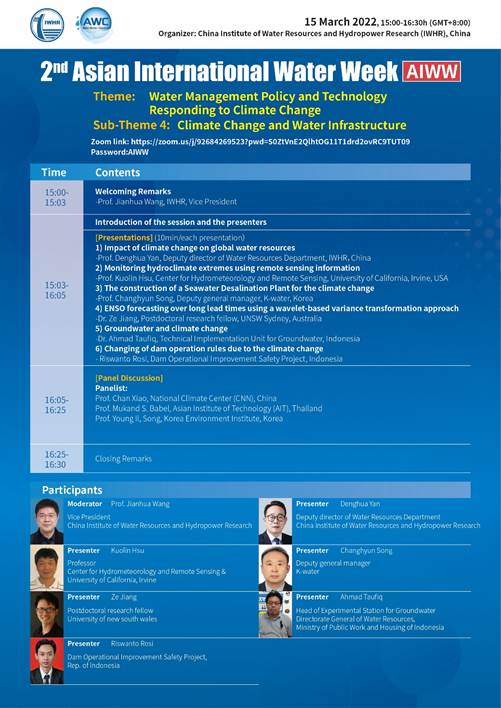
Water infrastructure could work as a concrete tool for climate change mitigation if it is designed, constructed and operated in a climate-adaptive way. Moderated by IWHR Vice President WANG Jianhua, experts from China, US, Korea, Australia and Indonesia discussed upon multiple issues concerning the interaction between water resources and water infrastructure under climate change.
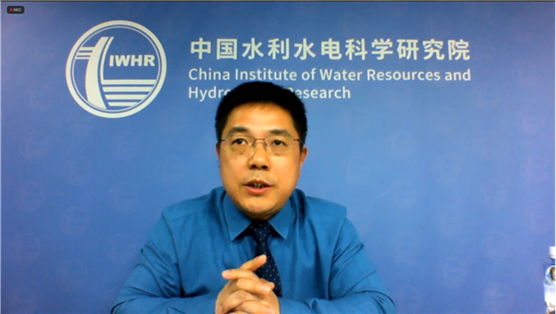
IWHR Vice President Dr. WANG Jianhua moderated the session
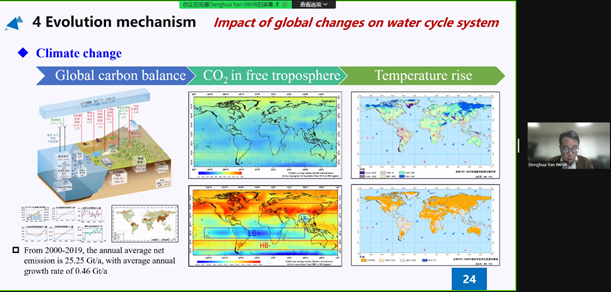
Impact of climate change on global water resources
-Prof. YAN Denghua, Deputy director of Water Resources Department, IWHR
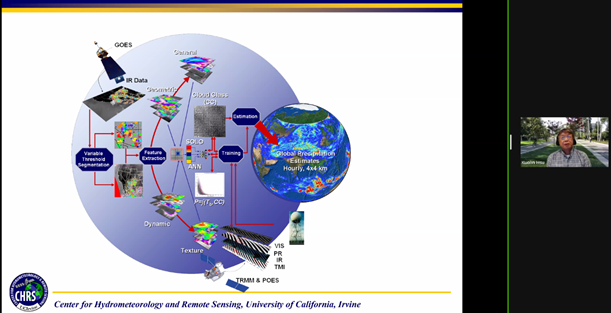
Monitoring hydroclimate extremes using remote sensing information
-Prof. Kuolin Hsu, Center for Hydrometeorology and Remote Sensing, University of California, Irvine, USA
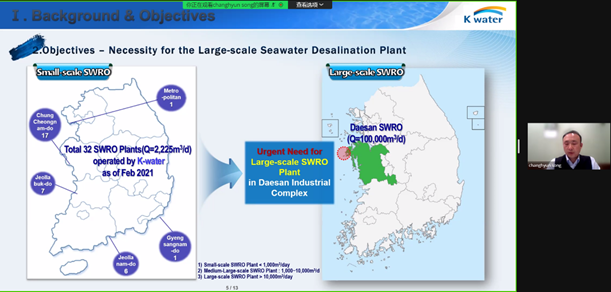
The construction of a seawater desalination plant for the climate change
-Prof. Changhyun Song, Deputy general manager, K-water, Korea
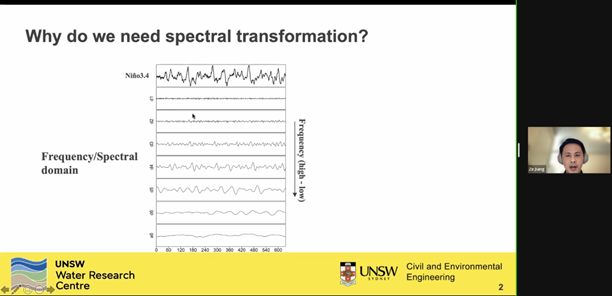
ENSO forecasting over long lead times using a wavelet-based variance transformation approach
-Dr. Ze Jiang, Postdoctoral research fellow, UNSW Sydney, Australia
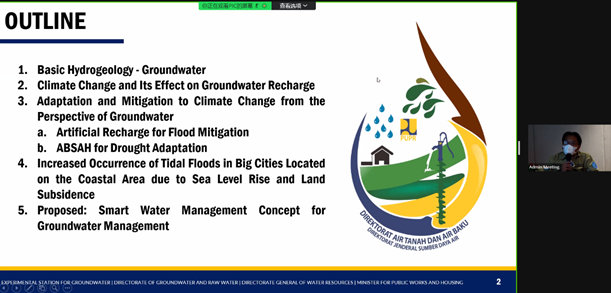
Groundwater and climate change
-Ahmad Taufiq, Technical Implementation Unit for Groundwater, Indonesia
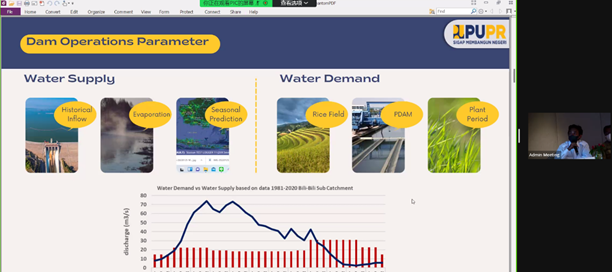
Changing of dam operation rules due to the climate change
- Riswanto Rosi, Dam Operational Improvement Safety Project, Indonesia
Parallel Session: Water Use Balance and Micro-Grid Nexus Application
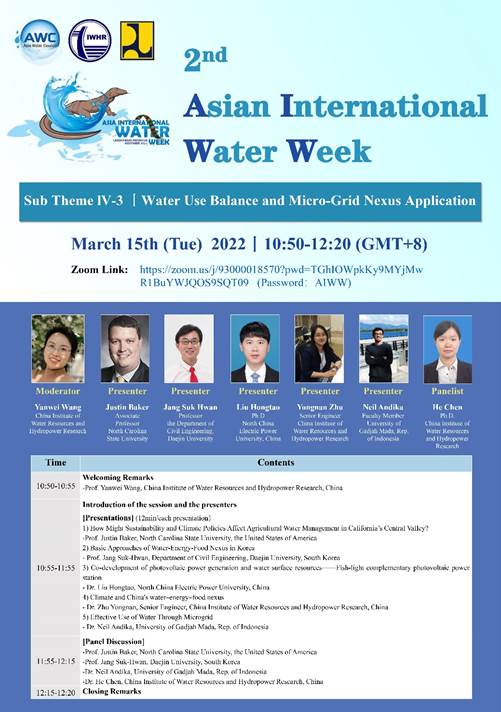
Water is natural resource whose development, usage and protection is closely related to energy and food sectors. Against the rapid urbanization, industrialization and population growth, strategies and technologies for integrated management of water in connection with energy and food are needed for analyzing the resource flow and achieving its efficient and balanced allocation. Moderated by IWHR expert, this session invited speakers from US, World Bank, Korea, China and Indonesia to share their latest research findings and practical cases on the applications of the water-energy-food nexus approach and provide new perspectives for achieving balanced water use.
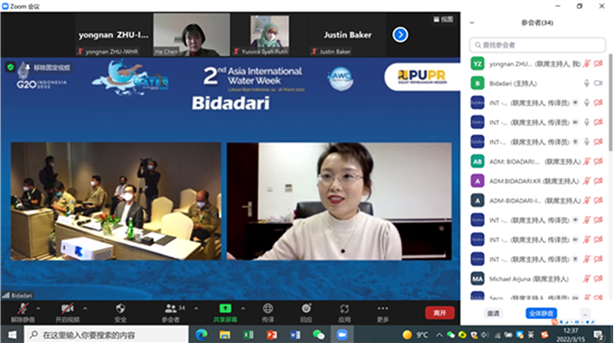
The “Water Use Balance and Micro-Grid Nexus Application” Parallel Session
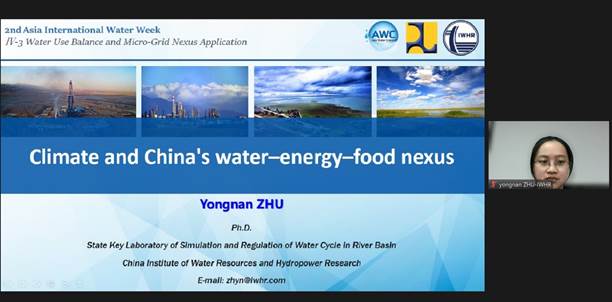
Climate and China's water–energy–food nexus
- Dr. Zhu Yongnan, Senior Engineer, China Institute of Water Resources and Hydropower Research, China
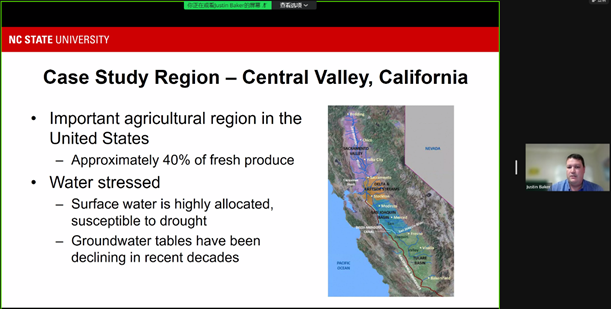
How Might Sustainability and Climate Policies Affect Agricultural Water Management in California’s Central Valley?
-Prof. Justin Baker, North Carolina State University, the United States of America
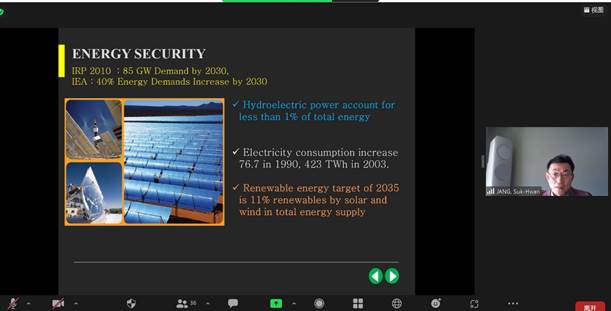
Basic Approaches of Water-Energy-Food Nexus in Korea
- Prof. Jang Suk-Hwan, Department of Civil Engineering, Daejin University, South Korea
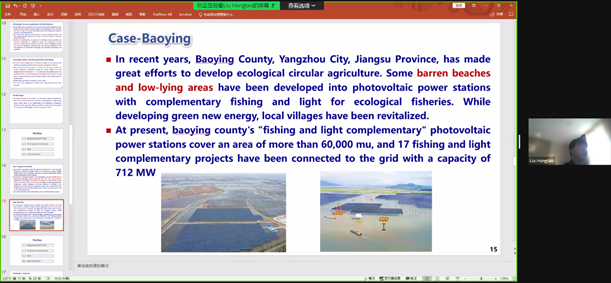
Co-development of photovoltaic power generation and water surface resources——Fish-light complementary photovoltaic power station
- Dr. Liu Hongtao, North China Electric Power University, China
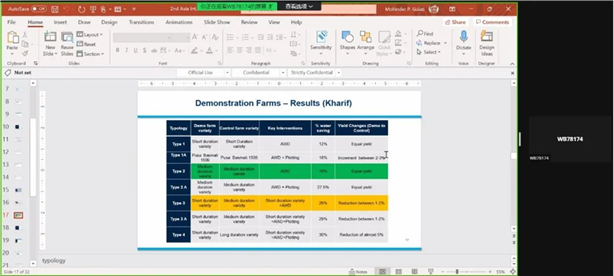
Energy-Water-Agriculture Nexus in India: Lessons from Punjab, Rajasthan, Gujarat
-Mr. Mohinder Gulati, former Operatin Officer, United Nations Sustainable Energy for all, and former Advisor (Energy), World Bank
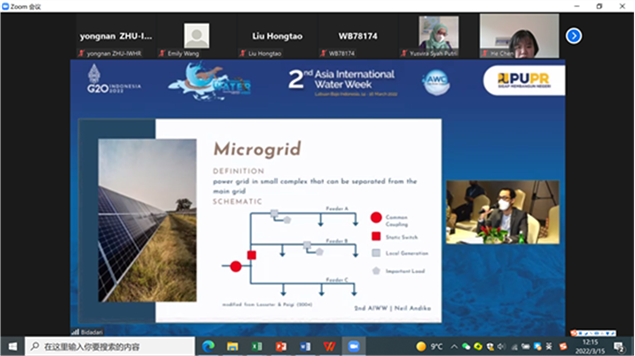
Effective Use of Water Through Microgrid
- Dr. Neil Andika, University of Gadjah Mada, Rep. of Indonesia
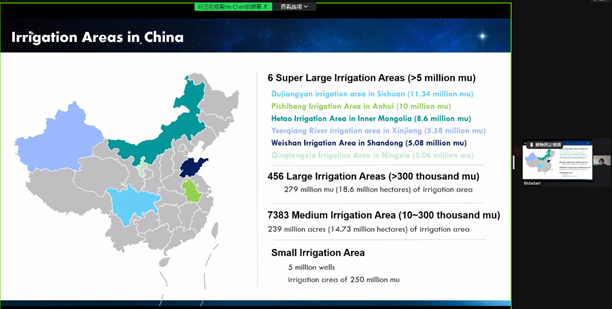
Dr. CHEN He from IWHR shared case study of China’s drinking water safety in rural areas in panel discussion
IWHR experts also attended two other parallel sessions and shared China’s experiences in building flood-resilient cities and mitigating flood disasters.
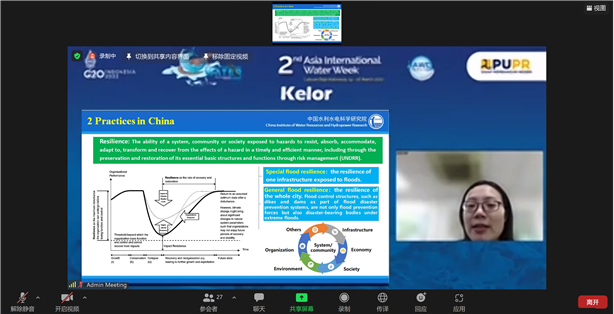
Dr. YU Qian from IWHR shared China’s building of flood-resilient cities
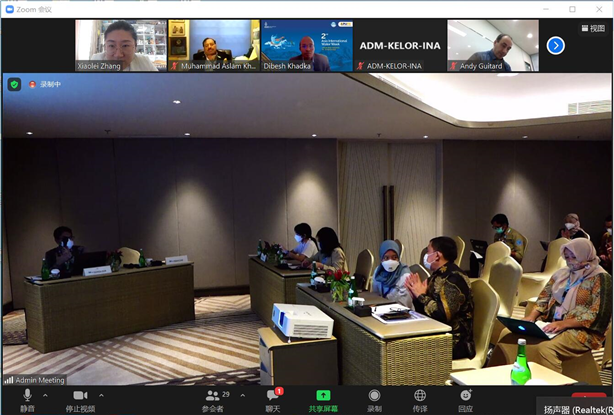
Dr. ZHANG Xiaolei from IWHR shared China’s flood control experiences
The AIWW was usually held every three years as a flagship event of the Asia Water Council (AWC). Under the 2030 Agenda for Sustainable Development, the AIWW serves as a platform to engage multi-stakeholders to share insights and work together for regional water problems in Asia. Water-related forums, seminars, round-table conferences and expos are organized during each AIWW. The outcomes of AIWW are presented on the World Water Forum to make water issues in Asia visible on the global agenda.
